I Came Home to Find My Sister Had Completely Redecorated My Room — And I Told Her I Hated Her for It
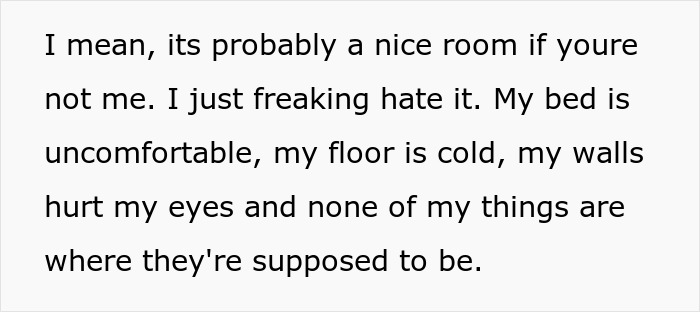
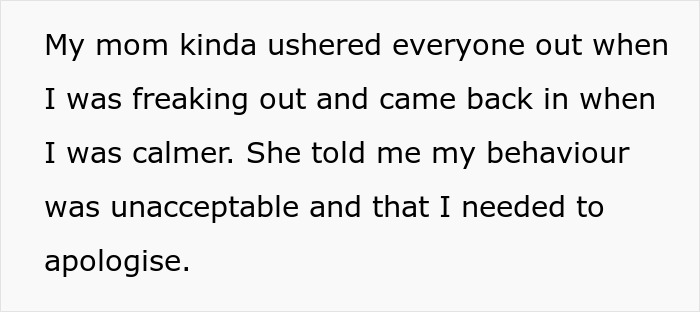
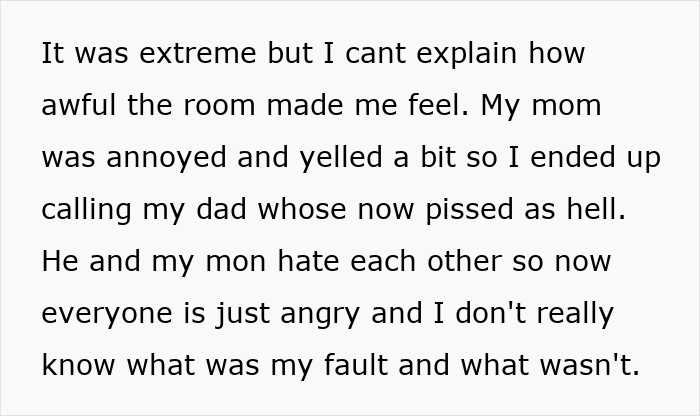
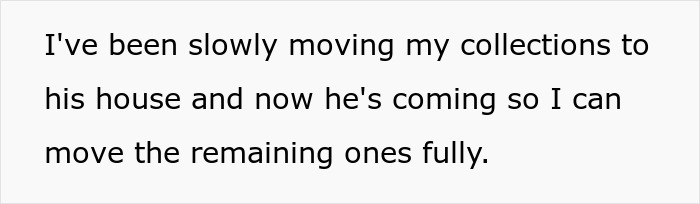
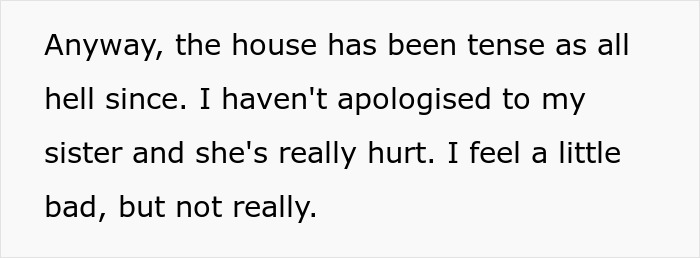
After spending two weeks at their dad’s house, a teenager returned home expecting things to be normal — only to discover their older sister had completely redesigned their bedroom without permission. The sister, who studied interior design and had already been renovating parts of the family home, proudly revealed the makeover as a surprise. But instead of gratitude, the teen had a screaming breakdown. Their carefully organized collections had been moved, some belongings were thrown away, the dark calming colors were replaced with bright blue walls, the carpet was swapped for cold wood flooring, and even the mattress had been changed. While the rest of the family viewed it as a generous gesture, the teen felt like their safe space had been completely violated. Things escalated further when the sister later demanded a “thank you,” leading to the teen admitting they hated both the room and her for changing it.

This story sparked such a strong reaction online because it touches on something a lot of people deeply understand but struggle to explain:
your room is not just a room.
Especially for teenagers, bedrooms often become the one place in life that feels fully theirs. It’s where people decompress, organize their thoughts, collect comfort items, and build routines around familiarity. So when someone drastically changes that space without permission, even with good intentions, it can feel surprisingly violating.
And honestly, the sister’s biggest mistake here wasn’t the decorating itself.
It was removing choice completely.
That’s the part people keep coming back to.
Because even if the redesign looked objectively beautiful, it still wasn’t designed for the person actually living there. The teen describes dark walls, carpet, firm mattresses, and organized collections that all clearly served a comfort purpose. Those things may sound small to outsiders, but sensory comfort matters a lot more than many people realize.
Certain textures, colors, lighting, room layouts, and routines can strongly affect emotional regulation, anxiety, and overall feelings of safety.
So while the family saw:
“A generous surprise makeover,”
the teen experienced:
“My safe place was erased without warning.”
That emotional gap explains why the reaction became so intense.
A lot of commenters also noticed the line:
“I hate surprises. Like, more than your average person.”
That sentence stands out because it suggests this wasn’t simply ordinary annoyance. Sudden environmental changes can feel genuinely overwhelming for some people, especially those with anxiety, sensory sensitivities, autism spectrum traits, OCD tendencies, trauma histories, or strong attachment to routine and organization.
Even without any diagnosis, some people simply process change differently.
And honestly, walking into a completely transformed bedroom after being away for two weeks would probably shock most people emotionally anyway. The teen didn’t just come home to a new paint color. Their belongings had been reorganized, some possessions disappeared entirely, and physical comfort items were replaced.
That’s huge.
The mattress detail especially stuck with readers because mattress comfort is intensely personal. Some people physically cannot sleep on memory foam comfortably. Others rely on firm surfaces for back pain, sensory regulation, or sleep quality. Replacing someone’s mattress without asking is honestly a massive gamble.
Then there’s the collections.
People who collect things often organize them very specifically. The organization itself becomes part of the comfort. Even moving items around can feel stressful because the person mentally maps where everything belongs. Throwing items away crosses another line entirely.
That’s probably why the teen reacted with panic instead of gratitude.
From their perspective, this wasn’t:
“She improved my room.”
It was:
“She went through my personal space, changed everything, and discarded my belongings.”
And honestly, most adults would be upset too if someone redecorated their bedroom without permission while they were away.
The family’s response also played a major role in escalating things.
Instead of recognizing that the teen was overwhelmed, the mother immediately focused on behavior and apologies. While the screaming probably was upsetting for everyone involved, emotional meltdowns usually don’t happen because someone is trying to be cruel. They happen because the nervous system gets overloaded.
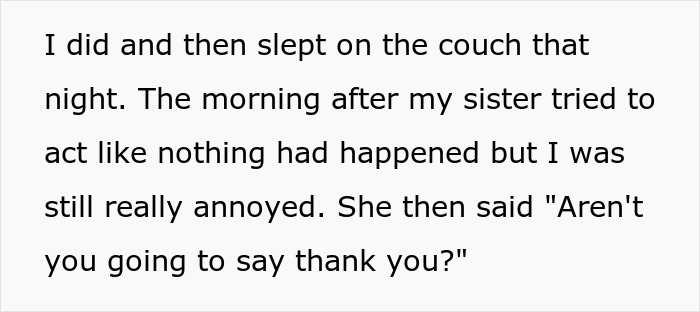
And the sister trying to act normal the next morning probably made things emotionally worse because the teen clearly hadn’t processed what happened yet.
Then came the line:
“Aren’t you going to say thank you?”
That’s where the conflict really exploded emotionally.
Because from the sister’s perspective, she likely spent a lot of time, money, and effort trying to do something kind. She probably imagined a dramatic happy reveal like home makeover shows where people cry with excitement.
Instead, she got screaming, rejection, and eventually:
“I hate you.”
That would hurt almost anyone.
But good intentions don’t automatically erase impact.
A lot of people online pointed out that surprise renovations almost never go well unless the person specifically asked for them. Personal spaces are deeply individual. What feels cozy to one person feels unbearable to another.
Bright blue walls might energize someone.
For someone else, they feel visually exhausting.
Wood floors might seem modern and stylish.
For someone else, they feel cold and uncomfortable.
Minimalism might feel peaceful to one person.
Another person feels emotionally attached to clutter, collections, and familiar organization.
None of those preferences are wrong.
And honestly, there’s another important layer here:
control.
Teenagers often have very little control over their lives. Adults decide schedules, schools, homes, rules, transportation, and routines. Bedrooms become one of the few places where identity and comfort feel self-directed.
Changing that space without permission can accidentally feel like:
“Your preferences don’t matter.”
That emotional message hits hard.
At the same time, most readers also felt the “I hate you” comment crossed a line emotionally, even if the feelings underneath were understandable. Saying you hate someone, especially someone who genuinely thought they were doing something kind, tends to leave lasting emotional damage.
But people also recognized that those words came during a moment of panic, overstimulation, and emotional overwhelm.
That doesn’t necessarily make them okay.
But it does make them understandable.
The saddest part of this whole story is that both people probably feel hurt for completely different reasons.
The sister likely feels rejected and unappreciated after investing time and money into a surprise she thought would make someone happy.
The teen feels violated, ignored, and emotionally unsafe inside what used to be their comfort space.
And honestly, both feelings can exist at the same time.
What really stands out is how little communication happened before any of this. A simple conversation could’ve prevented almost everything:
- “Would you like me to redesign your room?”
- “What colors do you like?”
- “Can we update parts of it together?”
- “Are there things you absolutely don’t want changed?”
Instead, the decision was made for them.
And once personal belongings get removed and comfort disappears, it stops feeling like a gift and starts feeling like someone else took ownership of your space without asking.
That’s why so many people reading this didn’t really see the conflict as being about decorating at all.
It was about consent, control, comfort, and feeling emotionally understood inside your own home.