I Caught the Kid I Babysit Pulling Fish Out of My Tank and Leaving Them to Die — Now Her Mom Thinks I’m Overreacting
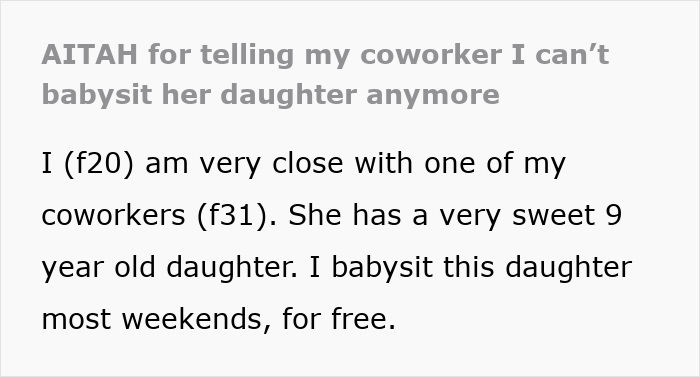
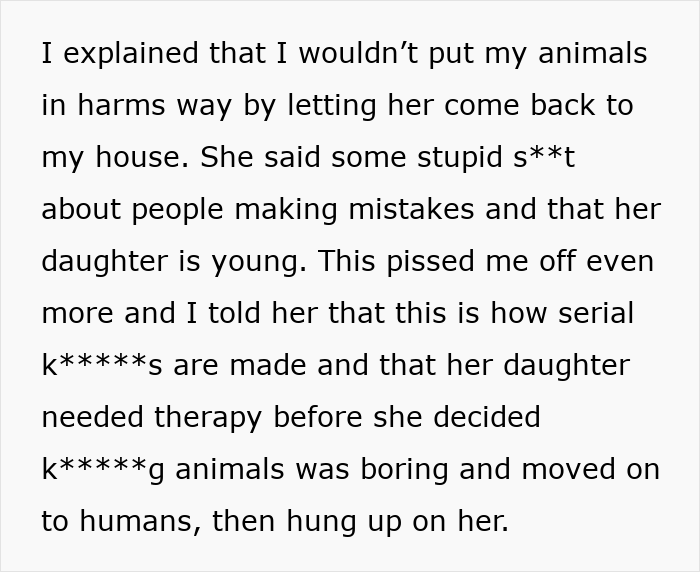
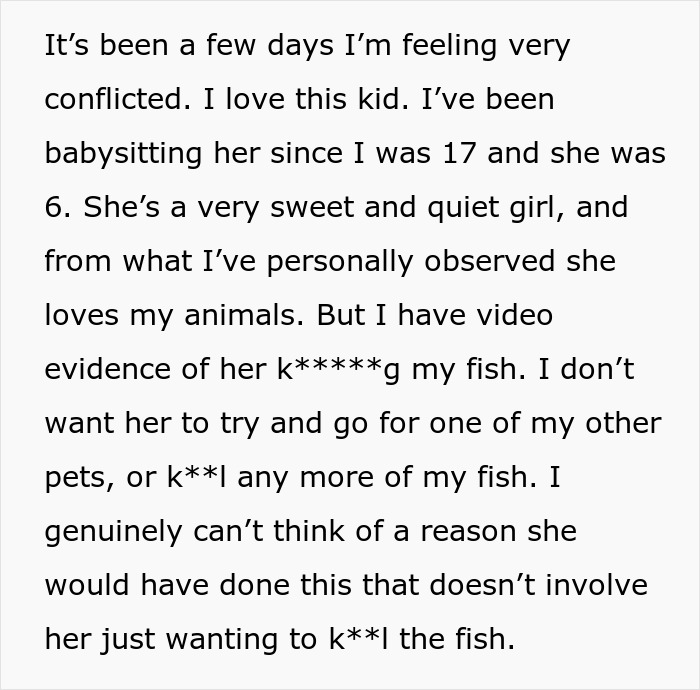
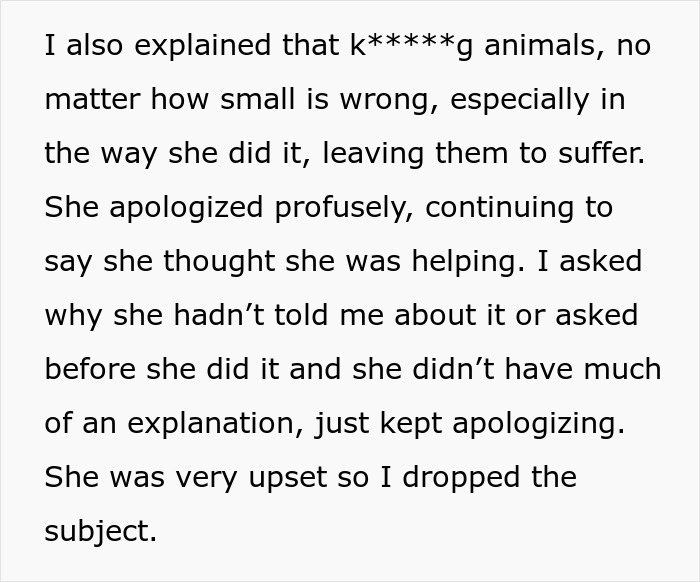
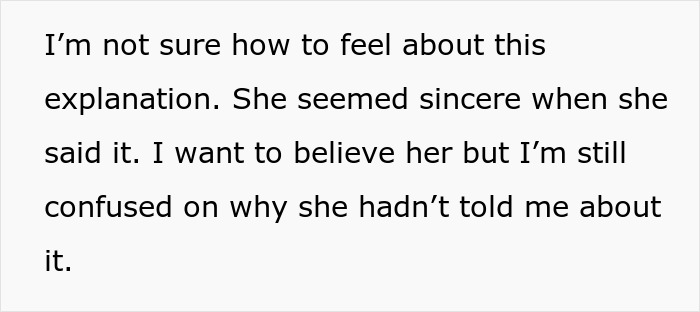
A 20-year-old woman says she’s torn after banning the 9-year-old daughter of a close coworker from her home. For years she babysat the child for free while the girl’s single mother worked long hours, and by all accounts the girl seemed quiet, polite, and obsessed with animals. But everything changed when the babysitter discovered several dead fish hidden behind one of her tanks and checked her home security footage. The video appeared to show the child repeatedly reaching into the aquarium, grabbing live fish, tossing them behind the tank, and calmly walking away while they died. Shocked and angry, she called the mother expecting concern or discipline, but instead got accused of overreacting. Now she’s questioning whether refusing to babysit anymore makes her heartless — or whether she’s simply protecting her pets after witnessing something deeply disturbing.



This story hit people hard because it completely clashes with the image most people have of cruelty. Usually when people imagine someone intentionally hurting animals, they picture aggression, anger, or obvious behavioral problems. But according to the babysitter, this little girl was quiet, calm, helpful, and seemed genuinely interested in animals.
That’s what makes the security footage so unsettling.
There wasn’t chaos.
No tantrum.
No visible rage.
Just a child calmly taking fish from the tank one by one and leaving them to suffocate behind it.
And honestly, that’s why the babysitter’s reaction became so emotional so quickly. Seeing something disturbing on camera changes things. It’s one thing to suspect a child accidentally harmed an animal. It’s another thing entirely to watch repeated actions that look intentional.
A lot of people online would probably immediately jump to the “future serial killer” comments because harming animals is often associated with serious behavioral warning signs in popular culture. But real life is actually more complicated than that.
Animal cruelty in children can come from a lot of different causes:
- curiosity without understanding consequences
- impulse control problems
- emotional regulation issues
- attention-seeking behavior
- exposure to violence
- developmental disorders
- untreated trauma
- lack of empathy development
- or, yes, in rare cases, more serious psychological concerns
That doesn’t automatically mean this child is dangerous or destined to become violent later in life.
But it also absolutely does not mean the behavior should be ignored.
That’s the important middle ground a lot of commenters would probably focus on.
Because while calling the child a future serial killer may have been emotionally charged and probably too extreme in the heat of the moment, the babysitter’s fear itself makes sense. Fish are living animals. The girl wasn’t accidentally overfeeding them or tapping on the glass too hard. She appeared to intentionally remove multiple fish and leave them to die slowly.
Most people would find that deeply upsetting.
Especially pet owners.
And honestly, another huge factor here is trust.
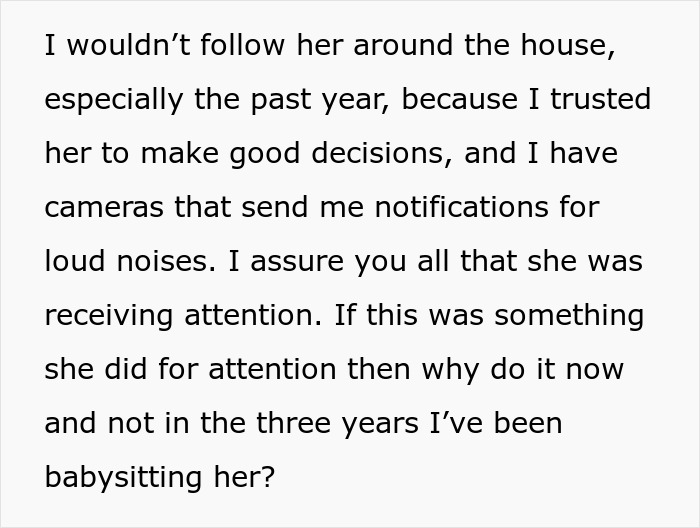
The babysitter had known this child for years. She allowed her around multiple pets because she believed she was kind and responsible. She even trusted her enough to not constantly supervise every movement in the house. That level of trust usually develops over time, especially after years without major issues.
Then suddenly she discovers footage that completely changes how safe she feels.
That kind of emotional whiplash is hard to process.
One moment you think:
“This kid loves animals.”
The next:
“Can I trust her around my pets at all?”
And once that fear enters your mind, it’s really difficult to ignore it.
The mother’s response also plays a massive role in why the situation escalated. From the babysitter’s perspective, she called expecting concern, accountability, maybe embarrassment or an apology. Instead, the mother minimized the behavior as a simple mistake.
That’s where things probably broke emotionally.
Because pulling one fish out might maybe sound like childish curiosity gone wrong.
Repeatedly doing it several times starts feeling intentional.
That difference matters.
A lot of people reading this would likely feel frustrated with the mother because even if she didn’t want her child labeled as dangerous, this should still have been treated seriously. A parent can defend their child emotionally while still acknowledging harmful behavior.
Something like:
“I’m horrified. I’ll talk to her immediately.”
probably would have changed the entire conversation.
Instead, the babysitter felt dismissed while grieving animals she cared about.
And honestly, fish owners often get overlooked when it comes to emotional attachment. People sometimes act like fish are “lesser pets,” but maintaining aquariums takes real time, money, effort, and emotional investment. Many fish owners become deeply attached to their tanks and the animals inside them. Watching them die unnecessarily can feel genuinely heartbreaking.
Another thing that stands out is the babysitter’s guilt afterward.
That guilt actually says a lot about her character.
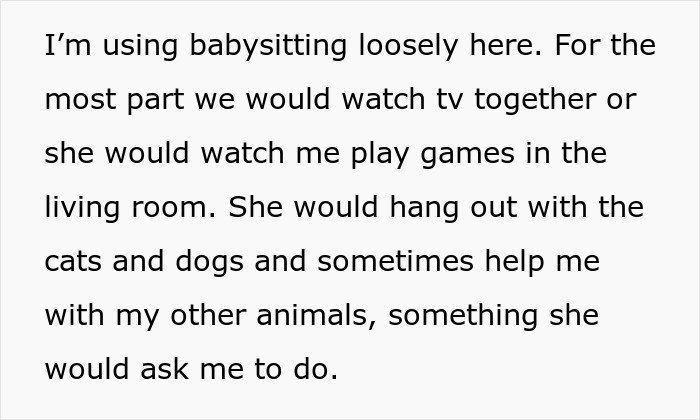
She clearly doesn’t hate this child. In fact, she sounds emotionally devastated by the whole thing because the behavior conflicts so strongly with the girl she thought she knew. She mentions years of babysitting, helping around the house, quietly watching TV, assisting with animal care, and generally being easy to have around.
That’s what makes situations like this emotionally messy:
people are rarely all good or all bad.
A child can be quiet, sweet, and still do something disturbing.
Someone can love animals and still harm one impulsively.
A parent can be exhausted and defensive while also mishandling the situation.
Real life is uncomfortable like that sometimes.
The additional context also changes things for many readers. The babysitter wasn’t neglecting the child or ignoring her all day. She describes a pretty relaxed arrangement where they spent time together naturally while she trusted the child to move around the home independently, which honestly isn’t unusual for a 9-year-old who’s been coming over for years.
A lot of commenters online tend to act like children need constant surveillance every second, but realistically many trusted older children are allowed independent movement in safe environments.
The bigger issue is simply that trust was broken.
And regardless of whether the child acted out of curiosity, impulse, emotional issues, or something more serious, the babysitter is still allowed to protect her pets and her peace of mind.
That’s the part some people struggle with online. They treat boundaries like punishments.
But refusing to babysit after animals were harmed isn’t revenge.
It’s risk management.
Especially because the babysitter has multiple pets and genuinely fears another incident could happen.
At the same time, the serial killer comment probably crossed a line emotionally. It’s understandable why she said it in anger after watching the footage, but labeling a 9-year-old that way could make the situation harder to address productively. Kids who display disturbing behavior usually need intervention, guidance, and evaluation — not permanent condemnation.
Still, strong emotional reactions are pretty understandable here.
Because at the center of this story is one deeply unsettling fact:
a child calmly caused suffering to living animals for reasons nobody fully understands yet.
And once someone sees that happen inside their own home, it’s very hard to simply act like everything is normal afterward.