Should She Leave Her Unmotivated Boyfriend Behind to Start Fresh in Alaska?
A 24-year-old woman in South Carolina is standing at a crossroads. She has to pick between staying with her unemployed boyfriend or moving to Alaska to finally build financial independence and long-term stability.
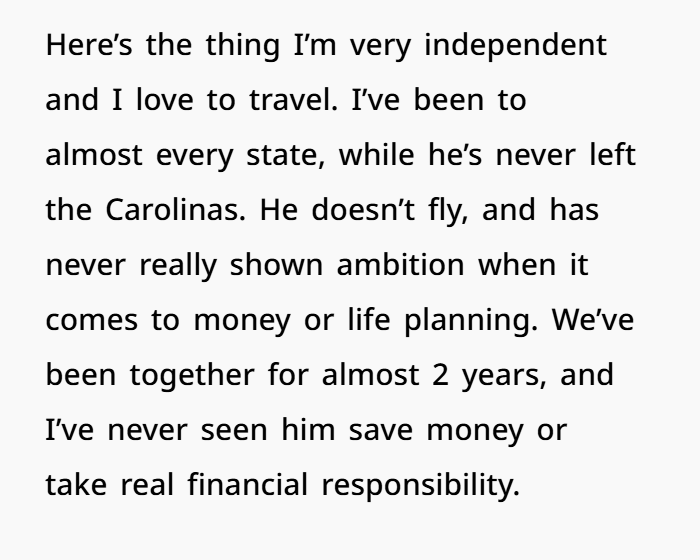
For almost two years, she’s been carrying the weight—paying the bills, giving emotional support, and basically being the only grown-up in the relationship. Meanwhile, he struggles with basic responsibilities and shows zero signs of wanting to change. Right now, she’s still living rent-free with her mom.
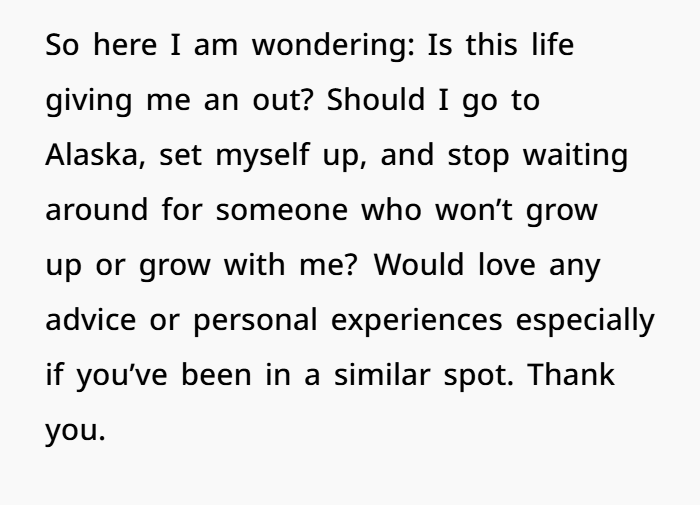
Then life throws her a lifeline. Her mom offers them a place in Dillingham, Alaska, along with good job opportunities and the chance to save for a house one day. For her, it feels like the perfect chance to hit reset—a shot at financial security and independence. But her boyfriend? He’s not excited at all. He hates the idea of flying, doesn’t want to move, and refuses to even plan for the future.
That moment makes it clear—they don’t share the same goals. She wants growth, stability, and a better future. He wants to stay stuck. Now she’s asking herself if this is the universe telling her it’s time to let go and choose herself.
This story is bigger than one couple. It’s about economic empowerment, relationship imbalance, and the hard choice between loyalty and self-growth. A lot of young adults hit this exact point: do you keep carrying someone else’s weight, or do you take the risk of stepping into a better future alone?
If one person always has to make all the sacrifices in the relationship, eventually, they have to start standing up for themselves

The poster mentioned that she was living rent-free in her mom’s house and that her unemployed boyfriend of two years also lived with her

Career Growth vs. Relationship Dynamics
1. Economic Empowerment vs. Relationship Stress
Money changes relationships—always has. Research shows when women step into the role of primary earner, hidden inequalities at home often rise to the surface. Things like unequal housework, emotional labor, and ambition gaps get exposed. For her, moving to Alaska for a stable, higher-paying job could either prove her relationship is strong—or show her it’s built on shaky ground.
2. Relocation & Self-Expansion
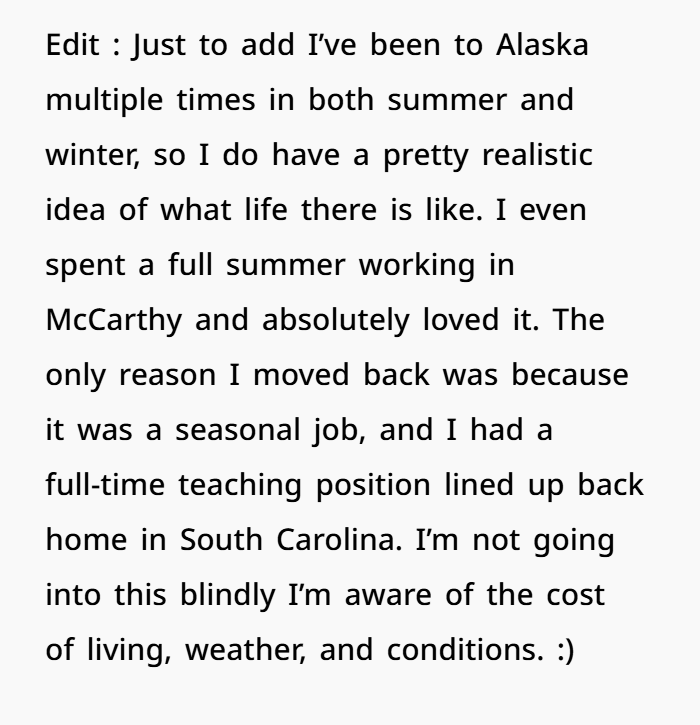
Leaving your comfort zone isn’t just about geography—it’s about growth. The self-expansion model suggests that personal development comes from new experiences and challenges. Relocating to Alaska would push her to build professional skills, resilience, and independence. It could also highlight her partner’s adaptability—or reveal that he’s not willing to grow at all.
3. Cost of Living & Financial Leverage
Yes, Alaska is pricier than South Carolina—groceries, housing, eating out—but the higher-paying jobs in Alaska often balance it out. With smart planning, she could actually save more money, faster. Tools like Bankrate or Forbes relocation calculators can map out exact costs, savings goals, and how soon she could realistically afford her own home. That’s financial freedom knocking.

4. Asymmetrical Commitment Risk
Here’s the tough truth: asymmetrical commitment kills relationships. Studies show that when one partner is all-in and the other isn’t, resentment builds. Her boyfriend’s lack of excitement about Alaska is a red flag. One partner is ready to take bold steps, the other is comfortable standing still. That imbalance rarely ends well.
5. The Trailing Spouse Dilemma
If he goes but has no plan, he risks becoming the trailing spouse—the partner who follows but never finds their own direction. Research shows that role creates frustration, resentment, and lost potential. She needs to ask herself if she’s okay building her future around someone who refuses to build his.
Final Takeaway
This isn’t just about Alaska—it’s about financial independence, personal growth, and relationship alignment. If her boyfriend truly values her, he’ll step up, adapt, and plan for the future. If not? Alaska is more than a move. It’s a reset button: good jobs, long-term savings, and a shot at buying a house debt-free.
At the end of the day, she has to ask: does staying help me grow—or hold me back?
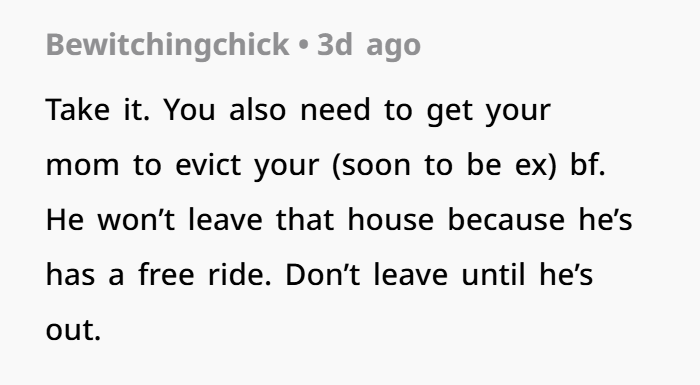
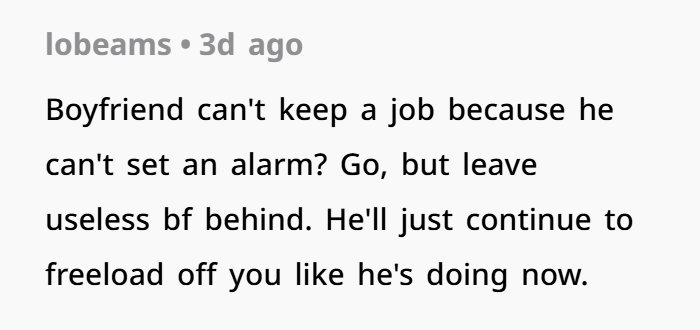
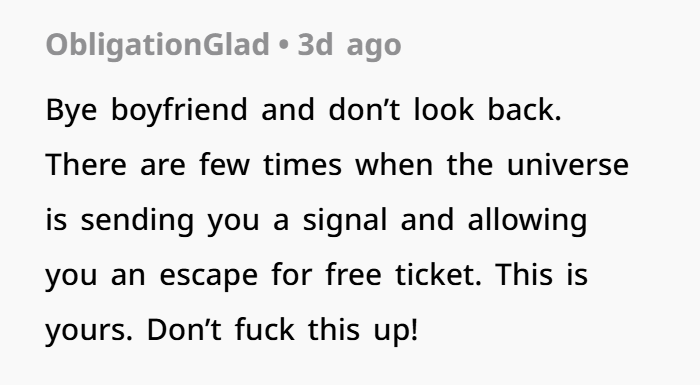
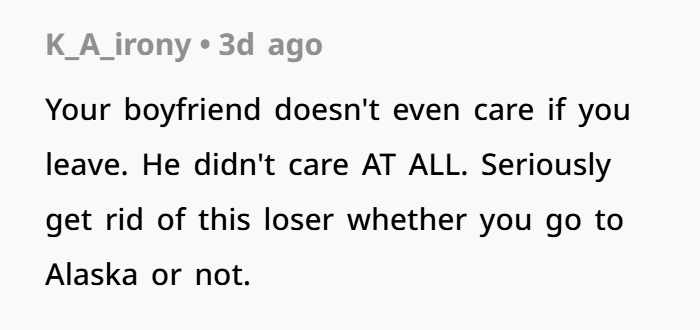
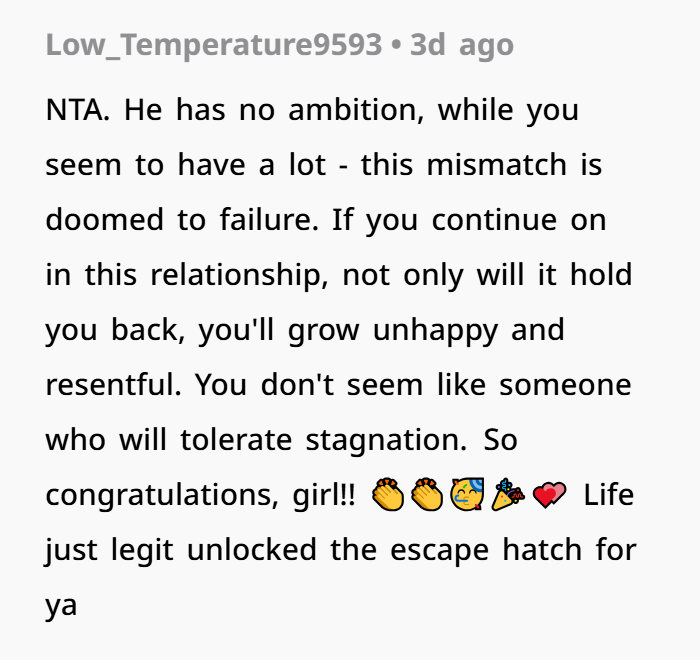
Netizens urged the woman to start thinking about her own well-being and to leave her deadbeat boyfriend behind