I Found Proof My Mom Had an Affair In a Nursing Home Room
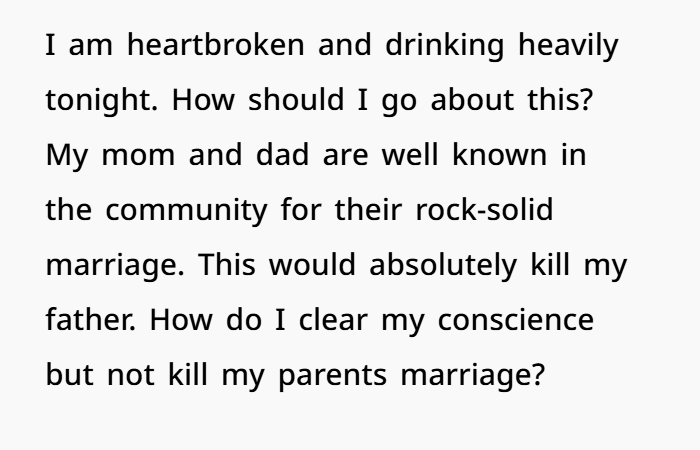
Sometimes life doesn’t unravel slowly. Sometimes it hits you all at once. That’s exactly what happened to a 23-year-old caregiver working in an assisted living facility. After being reassigned to a new wing, he began caring for a resident named “John,” a double amputee with no close family left. While helping him into bed one night, he noticed a small corkboard filled with old photographs — snapshots of a life lived long ago. And in the middle of them, staring back at him, was his mother.
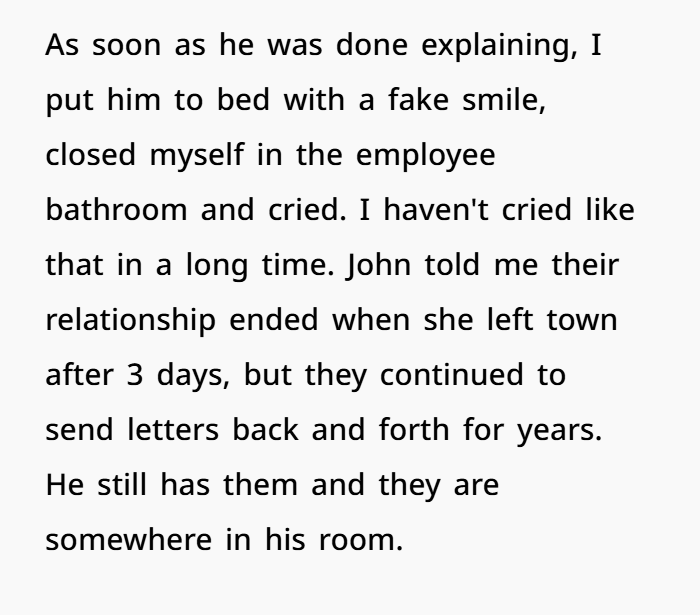
The photo wasn’t subtle. His mother, looking a little younger but unmistakably herself, stood close to the resident. They were holding hands. Cozy. Intimate. The back of the picture confirmed the year — a time when she was married to his father and raising an eight-year-old son. That son was him. When he later confronted the resident gently, the truth came out. They met at a business conference. Sparks flew. A three-day affair turned into years of secret letters. Now the caregiver is stuck with a heavy secret: protect his father and preserve the image of a “rock-solid marriage,” or expose a painful truth that could destroy his family.




Let’s slow this down, because this kind of discovery messes with your head in ways you don’t expect. Finding out a parent had an affair isn’t just about them. It hits your identity. Your childhood. The story you thought you grew up inside. And when you find evidence inside an assisted living facility, while working in healthcare, it adds another layer of emotional stress.
1. The Psychology of Infidelity — Why Affairs Happen
Infidelity isn’t rare. Studies in relationship counseling and marriage therapy show that anywhere between 15–25% of married individuals admit to cheating at least once. Those numbers may even be higher due to underreporting. Affairs don’t always come from hatred or broken marriages. Sometimes they stem from emotional neglect, opportunity, ego validation, or what therapists call “situational vulnerability.”
In this case, the mother was traveling for work. Travel increases opportunity. Business conferences, hotels, distance from daily responsibilities — all of it lowers psychological barriers. There’s even research in behavioral psychology suggesting that when people are physically removed from their normal environment, they engage in riskier behavior. It feels detached from real life.
But here’s what’s striking. The affair wasn’t just physical. They exchanged letters for years. That’s not a one-night mistake. That’s emotional attachment. Emotional affairs often cut deeper than physical ones because they create intimacy outside the marriage.
For the son discovering this? It’s betrayal trauma. That’s the term therapists use when trust is broken by someone foundational to your sense of safety. It creates anger, sadness, confusion, and sometimes misplaced guilt.

2. The Impact on Adult Children
We don’t talk about this enough. When adult children discover parental infidelity decades later, it triggers identity instability. You start questioning memories. “Were they really happy?” “Was my childhood fake?” It’s heavy.
Family therapy research shows that adult children often feel responsible for protecting the “stable parent” — usually the one perceived as faithful. In this story, the father is described as respected, part of a well-known solid marriage. That reputation creates social pressure. Community image becomes part of the equation.
Now layer in caregiving stress. Working in senior care already comes with burnout risk. Compassion fatigue is real in healthcare jobs, especially in long-term care settings. Add emotional trauma on top of that? It can amplify anxiety and depression symptoms.
3. Should He Tell His Father? The Moral Dilemma
This is where it gets complicated.
From a relationship advice standpoint, honesty is generally encouraged in marriages. Transparency builds trust. But this isn’t his marriage. It’s his parents’. And the affair happened over a decade ago.
Legally speaking, unless there are financial implications — like hidden assets or divorce proceedings — there’s no obligation to disclose. Adultery laws technically still exist in a few U.S. states, but they are rarely enforced and mostly irrelevant unless part of divorce litigation.
So the question becomes emotional, not legal.
If he tells his father:
- It could shatter decades of stability.
- It may lead to divorce.
- It may permanently damage his relationship with his mother.
- It may bring relief through truth.
If he stays silent:
- He carries emotional burden.
- He protects the current peace.
- He risks feeling complicit in a lie.
Family counselors often recommend asking: Who does this serve? Is disclosure about justice, or about relieving personal guilt? That’s a hard question to sit with.

4. The Resident’s Perspective
There’s also “John.” He appears to have believed the relationship was real. Long letters. Emotional attachment. He may not even know she was married. That introduces another layer — deception toward him too.
For someone in elderly care, nearing end-of-life, those memories can be sacred. For many seniors in nursing homes or assisted living centers, past relationships are anchors. They help preserve identity when everything else feels lost.
If confronted harshly, it could emotionally destabilize him. Healthcare ethics prioritize patient well-being. As a caregiver, maintaining professional boundaries is critical. He can’t ethically interrogate a resident for personal closure.
5. Affairs and Long-Term Marriages
Long marriages sometimes survive affairs. Research from the American Association for Marriage and Family Therapy shows that many couples who undergo marriage counseling after infidelity actually report stronger communication later on. But that requires mutual disclosure and willingness to repair.
In this case, the affair is old. It ended. There was no continued physical relationship. The letters stopped eventually. The marriage survived decades.
So another question arises: does exposing a 15-year-old betrayal help anyone now?
There’s no clean answer. Experts in infidelity recovery often suggest a staged approach:
- Process your emotions privately first.
- Avoid impulsive confrontation.
- Seek confidential therapy if possible.
- Consider speaking to the parent involved before exposing the other.

Confronting his mother privately could provide context. Maybe the marriage was struggling at that time. Maybe his father knows already. That’s more common than people think. Sometimes couples quietly rebuild without telling children.
6. Alcohol as Coping
He mentioned heavy drinking that night. That’s understandable but dangerous. Acute stress can push people toward alcohol misuse. In healthcare professionals especially, stress-related drinking is a documented issue. It numbs short-term pain but worsens long-term anxiety and depression.
Healthy coping would look more like:
- Talking to a therapist (especially one specializing in family systems therapy).
- Writing down thoughts before confronting anyone.
- Taking a few days before making decisions.
- Avoiding emotional decisions during high stress.
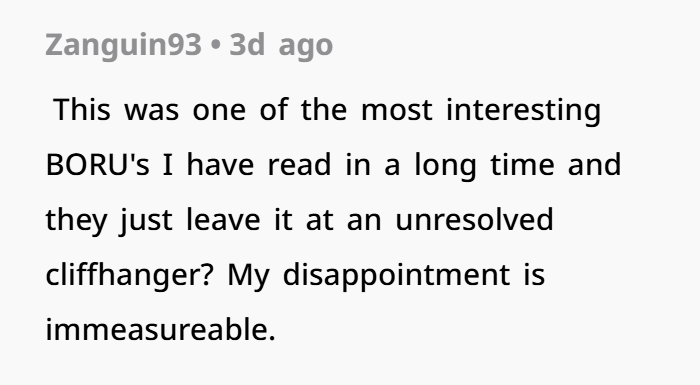
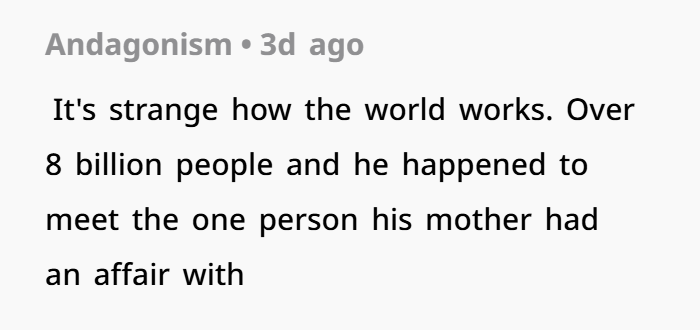
Folks were shocked by the poster’s predicament, with some urging him to keep the secret, and others feeling his dad might already know the truth





7. Clearing His Conscience Without Destroying Everything
If the goal is peace, not revenge, then the path forward probably begins with a private conversation with his mother. Calm. Curious. Not accusatory.
Something like:
“I found something unexpected at work. I need to understand it.”
That opens dialogue without detonating a bomb.
He doesn’t owe anyone silence. But he also doesn’t owe anyone destruction.
At the end of the day, this is about boundaries. He is the child, not the marriage counselor. He didn’t cause this. He didn’t create the affair. And he is not responsible for repairing or exposing it alone.
The hardest truth here? Sometimes you learn something about your parents that reshapes them. They stop being heroes. They become human.
And that hurts.
But being human means messy decisions. Complicated love. Mistakes. Regret.
The real question isn’t just “Do I tell my dad?”
It’s “What outcome can I live with long term?”
Because whatever he chooses, that choice will stay with him.