I Kissed Someone Else Two Weeks Into My Relationship… Do I Tell My Boyfriend Now?
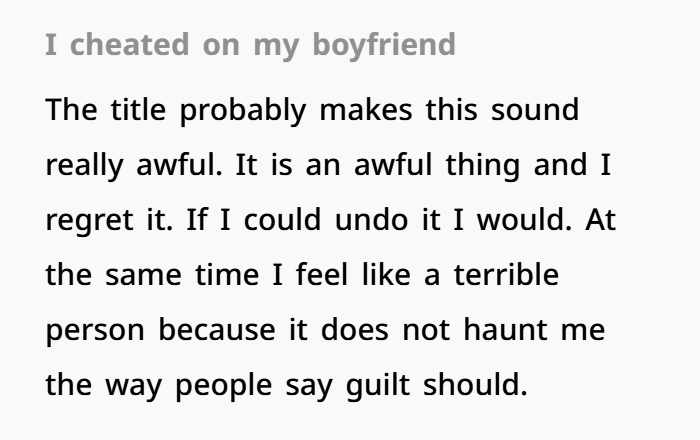
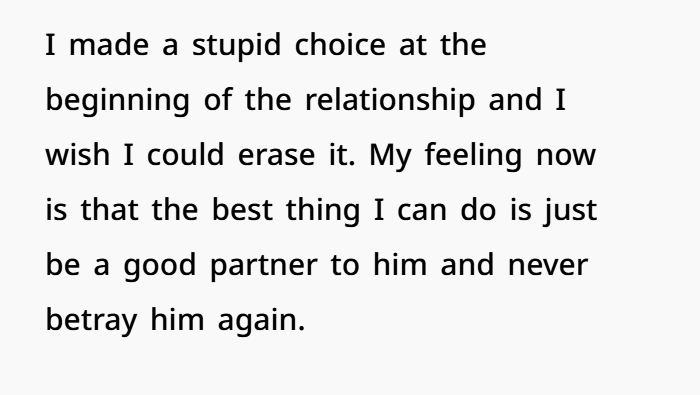
One year into what feels like her first real and meaningful relationship, a woman is carrying a quiet secret that started only two weeks after things began. At the time she was insecure, unsure if the relationship would last, and about to enter a long-distance relationship. During that uncertain period she ended up alone with someone she had known before, and in a moment of confusion they kissed. The situation didn’t go further—she stopped it almost immediately because it felt wrong. The experience actually made her realize how strongly she cared about her boyfriend. But she never told him. Now, while the incident rarely crosses her mind in daily life, the fear of him someday discovering the truth still lingers. She wonders if revealing it now would only create unnecessary pain or if honesty is necessary for a healthy relationship built on trust. The situation highlights a difficult dilemma many couples face around relationship trust, emotional honesty, cheating guilt, and long-term relationship communication.

When people hear the word cheating, their minds usually jump to the worst-case scenarios—secret relationships, emotional affairs, or sleeping with someone behind a partner’s back. But real life is often messier and more complicated than that. Many relationship therapists talk about what they call “early relationship gray zones.” These are situations that happen right at the beginning of dating, when boundaries, expectations, and emotional commitment are still forming.
That’s exactly where this story sits.
Two weeks into a relationship is a strange moment emotionally. Technically you’re together, but you’re also still learning what that commitment actually means. For someone who has never been in a relationship before, that confusion can be even stronger. There’s excitement, insecurity, doubt, and a lot of questions about whether the relationship will last.
In this case, insecurity played a big role. When someone spends years believing they aren’t romantically desirable, the first serious relationship can feel almost unreal. Psychologists who study relationship insecurity and attachment styles say this is extremely common. People sometimes seek reassurance that the relationship is real or test their feelings without fully realizing what they’re doing.
That doesn’t excuse the action, but it does explain the mindset.

The kiss happened in a moment that combined several emotional pressures: a new relationship, past history with someone else, and the looming start of a long-distance relationship. Long-distance relationships have a reputation for being fragile, and hearing that repeatedly can plant seeds of doubt. Research around long distance relationship success rates shows they can work just as well as normal relationships, but the fear of failure still influences people early on.
So in that uncertain moment, curiosity and insecurity collided.
The interesting part of the story is what happened immediately after. The kiss didn’t feel exciting or romantic. It felt wrong. That moment actually strengthened her feelings for her boyfriend because it made the difference between the two experiences clear.
That’s something relationship psychologists often call a “contrast moment.” It’s when a person experiences something that highlights how much they value their partner. Sometimes those moments happen in healthy ways, like meeting new people and realizing you still prefer your partner. Other times they happen through mistakes.
Either way, the realization can still be real.
The bigger issue now isn’t the kiss itself. It’s the secret.
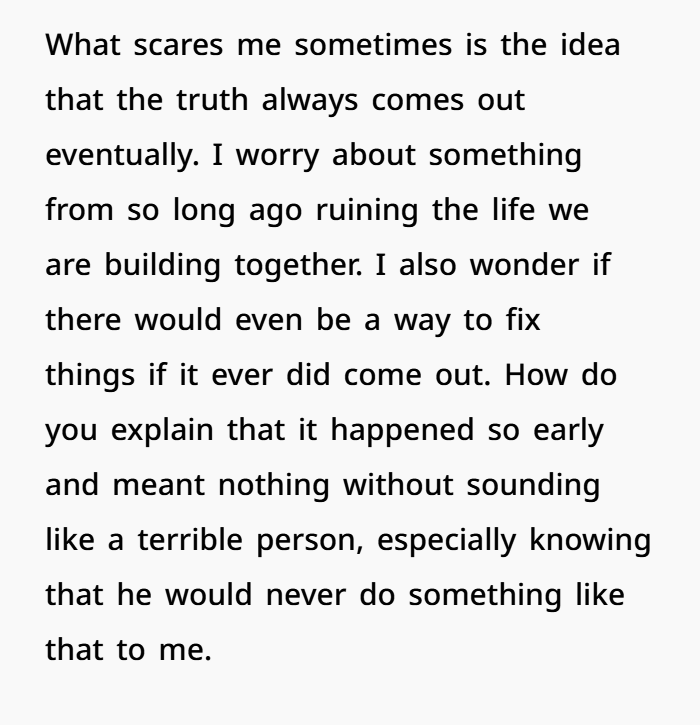
Secrets in relationships create a unique kind of psychological stress. Even if someone rarely thinks about the event itself, the possibility of it being discovered can create ongoing anxiety. Studies in relationship trust psychology show that hidden actions can produce long-term stress because the person holding the secret is constantly aware of the risk of exposure.
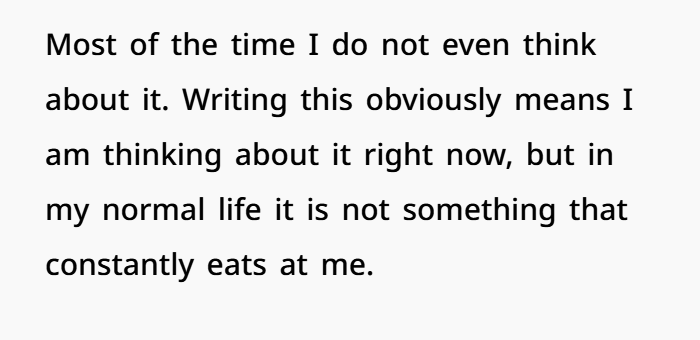
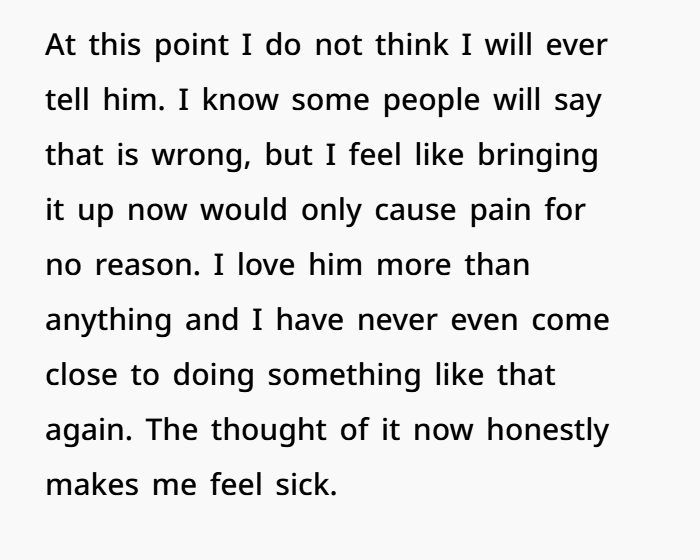
Interestingly, the guilt in this story isn’t overwhelming. That might sound strange, but it actually makes sense. Guilt tends to fade when someone genuinely believes they learned from a mistake and changed their behavior. In this case, the person hasn’t repeated the behavior and feels strongly committed to her partner now.
What remains isn’t guilt.
It’s fear.
Fear that the truth might surface later and destroy something good.
This fear connects to one of the biggest debates in relationship advice and couples therapy: should every past mistake be confessed, or is it sometimes better to let the past stay in the past?
Different experts fall on different sides of that debate.
Some therapists argue that honesty is the foundation of a healthy relationship. According to this perspective, even small betrayals should eventually be disclosed because secrets create hidden cracks in trust. If the truth comes out later from another source, the damage can be far worse than if the person confessed voluntarily.
Other relationship counselors take a more nuanced view. They suggest considering the purpose of the confession. If revealing the truth only relieves the guilt of the person confessing while causing unnecessary pain for the partner, it may not always be the healthiest choice.
That’s where this situation becomes complicated.
The event happened extremely early in the relationship. It didn’t develop into an affair, it stopped immediately, and the partner involved didn’t even know about the relationship at the time. In many ways, it sits at the smallest edge of what people consider cheating.
But emotionally, the label still matters.
From the boyfriend’s perspective, hearing that his partner kissed someone else shortly after they started dating could still feel like a betrayal. Even if it happened during a period of uncertainty, people often reinterpret early relationship events once they know how serious the relationship eventually became.
This is why timing matters so much in relationship communication and conflict resolution.
If the truth had been shared right after the incident, the conversation would have happened within the context of a brand new relationship. At that stage, some couples choose to move past small mistakes more easily because the emotional investment is still developing.
A year later, the same information can feel heavier because the relationship has grown deeper.
But that doesn’t automatically mean the relationship would end. Real relationships are rarely destroyed by a single early mistake. What matters more is how the situation is explained and whether the partner believes the explanation reflects genuine honesty and growth.
Another important piece here is self-forgiveness.
People often underestimate how important self-forgiveness is for maintaining healthy relationships. Carrying the belief that you are secretly a terrible partner can affect how you behave over time. You might overcompensate, avoid difficult conversations, or constantly worry about being “found out.”
None of those things actually strengthen a relationship.
Learning from a mistake and committing to better behavior moving forward is often the most meaningful way to rebuild personal integrity.
And based on the story, that’s exactly what happened.
The kiss didn’t open the door to more betrayal. Instead it reinforced how much she valued her boyfriend and the relationship. In many ways, the experience clarified her feelings rather than weakening them.
Still, the question remains: what happens if the truth eventually comes out?
In situations like this, honesty about context becomes critical. Explaining that it happened two weeks into the relationship, during a period of insecurity and uncertainty, changes the emotional framework of the story. It doesn’t erase the mistake, but it helps explain it.
Most people understand that humans make poor decisions sometimes, especially when they’re confused or afraid.
The real test of character is what happens afterward.
Did the behavior continue?
Did it become a pattern?
Or did the person learn from it and commit more deeply to the relationship?
In this case, the evidence points strongly toward the third option.
Relationships are built over time through thousands of small choices—loyalty, kindness, patience, and honesty. One early mistake doesn’t automatically erase everything that follows. But unresolved secrets can create emotional tension that lingers quietly beneath the surface.
Whether the truth is shared someday or kept private forever, the most important part is the commitment behind it: choosing every day to protect the relationship rather than risk it again.
Because in the end, long-term love isn’t defined by the absence of mistakes.
It’s defined by the decisions people make after those mistakes happen.