She Tried to Burn Us Alive Because He’s Gay
We always thought my MIL was all talk. Angry words. Ugly threats. The kind you roll your eyes at because surely no mother would actually hurt her own child. We were wrong. One night, while we were fast asleep, she set our house on fire. If our dog hadn’t jumped on the bed and barked like crazy, we would’ve died in our sleep. I’m a firefighter. I know what smoke does in a house fire. It doesn’t give you time. It doesn’t glow like in the movies. It turns everything black. You can’t see your hands. You can’t breathe. We barely made it out through the window. Our home? Gone. Beyond repair.
She didn’t even try to deny it. In fact, she made it worse. What started as an arson investigation turned into something much heavier when she admitted she wanted her son dead because he’s gay. She said she’d rather have no son than a gay son. Those words changed everything legally. Now she’s facing serious prison time for arson with intent to endanger life. We’re staying with friends. We lost everything — documents, passports, memories. But we’re alive. And honestly, that’s the only reason I’m even writing this.
Let’s talk about what this really is. This isn’t just family drama gone wild. This isn’t just property damage. This is felony arson, attempted homicide territory, and possibly even a hate crime.
In most states, arson is already a serious felony offense. When someone intentionally sets fire to an occupied structure, prosecutors can upgrade the charge to arson with intent to endanger life. That changes everything. We’re no longer talking about insurance claims or property loss. We’re talking about prison sentences that can run into decades. In some jurisdictions, it can even mean life imprisonment.
High-profile arson cases show how courts treat these crimes. Take the case of the Happy Land Social Club fire in 1990 in New York, where arson killed 87 people. The perpetrator received 25 years to life. Courts don’t play around when fire is used as a weapon. Fire spreads fast. It doesn’t ask questions. It doesn’t stop at one room.
Then there’s the hate crime element. When someone commits a violent act motivated by sexual orientation bias, prosecutors may pursue enhanced penalties under hate crime laws. Federal law, including the Matthew Shepard and James Byrd Jr. Hate Crimes Prevention Act, allows the government to step in when violence is motivated by race, religion, gender identity, or sexual orientation. If proven, sentencing enhancements can significantly increase prison time.
What makes this case legally explosive is her own confession. She said she wanted her son dead because he’s gay. That’s intent. In criminal law, intent is everything. You can’t accidentally confess to wanting someone dead. Her statement likely shifted the charge from simple arson to something closer to attempted murder or aggravated arson.
Intent plus occupancy equals nightmare scenario for a defense attorney.
And let’s clear up something else. A lot of people think being a firefighter means you’re somehow immune to fire. That you can just “handle it.” That’s not how it works. Structural fires reach temperatures over 1,100 degrees Fahrenheit within minutes. Smoke inhalation is the leading cause of death in house fires, not burns. Most victims die from toxic gases long before flames reach them. Without turnout gear, breathing apparatus, and a coordinated crew, even a trained firefighter is just another human in a death trap.
The National Fire Protection Association (NFPA) reports that most fatal fires occur between midnight and 6 a.m. Why? Because people are sleeping. Reaction times are slower. Smoke alarms are sometimes ignored. In our case, it wasn’t the alarm that saved us. It was our dog. Pets have been documented in multiple cases as early warning systems. There are verified reports of dogs waking families before smoke detectors fully activated.
From an insurance standpoint, this becomes complicated too. When arson is committed by a third party, homeowners insurance typically covers fire damage. But rebuilding takes time. And trauma isn’t something you can file a claim for. Fire damage restoration costs can easily reach hundreds of thousands of dollars. Structural instability, smoke contamination, electrical damage — it adds up fast.
Then there’s the emotional cost. Survivors of residential fires often experience symptoms similar to PTSD. Nightmares. Anxiety. Hyper-awareness of smells. According to the American Psychological Association, traumatic events involving life-threatening danger can have long-term mental health impacts, especially when the perpetrator is a family member. Betrayal trauma hits differently. When harm comes from someone who was supposed to protect you, it rewires trust.
And let’s talk about homophobia within families. Studies from organizations like The Trevor Project show that LGBTQ+ individuals rejected by family members are at significantly higher risk for depression, homelessness, and suicide. Family rejection isn’t just emotional. In extreme cases, like this one, it becomes violent.
There have been other cases where parents harmed or attempted to harm LGBTQ+ children due to extremist beliefs. Courts consistently treat these cases as aggravated offenses. Motivation rooted in bias doesn’t soften a sentence. It makes it worse.
From a criminal defense perspective, once someone confesses and states motive clearly, options shrink. A defense attorney may try to argue diminished capacity, mental instability, or lack of premeditation. But premeditation can be inferred from prior threats. If there were documented warnings, texts, or witnesses to her threats, prosecutors can build a timeline showing planning.
And juries don’t look kindly on someone who sets a house on fire with people inside. Especially not over sexual orientation.
Another layer here is domestic terrorism laws, depending on jurisdiction. When violence is intended to intimidate or coerce a civilian population based on ideology, prosecutors sometimes explore those angles. Not always, but it happens.
Legally, she’s in deep trouble.
But here’s the part that doesn’t make headlines. The aftermath. Replacing birth certificates. Filing for new passports. Contacting banks. Canceling credit cards. Insurance adjusters walking through ash. Sleeping in someone else’s guest room. Realizing every photo album is gone.
And the anger. The kind that comes in waves. Because this wasn’t random. It wasn’t a stranger. It was his mother.
Readers expressed sympathies for the ordeal the couple had to go through
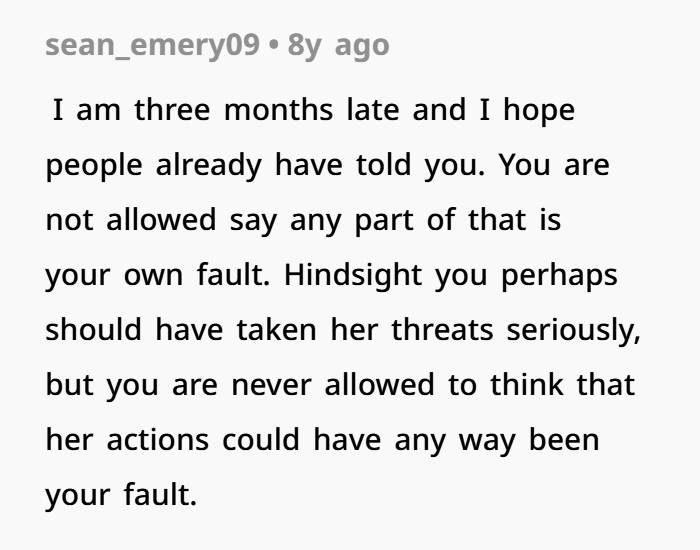



We used to think, “Other gay people deal with homophobic parents and it never escalates.” That logic kept us calm. We minimized her threats. That’s something psychologists call normalization of deviance. When someone behaves badly repeatedly and nothing catastrophic happens, we slowly start treating the behavior as normal. Until one day it’s not.
The legal system will handle her sentence. The courts will decide how many years she spends behind bars. But the damage she caused isn’t measured only in prison time. It’s measured in trust broken. In memories burned. In the fact that a grown man had to hear his own mother say she wished him dead.